PhD life isn’t just data and deadlines — it’s also teamwork, trial-and-error, and the occasional existential crisis over tracked changes.
I hadn’t written about this before, but I really felt like sharing some thoughts. Over the past few months, I’ve been fully immersed in writing and revising academic papers, and the experience — far from being just technical — has actually turned out to be surprisingly fun. It’s also given me the chance to connect with a wide range of people, both inside and outside the university, and that has made all the difference.
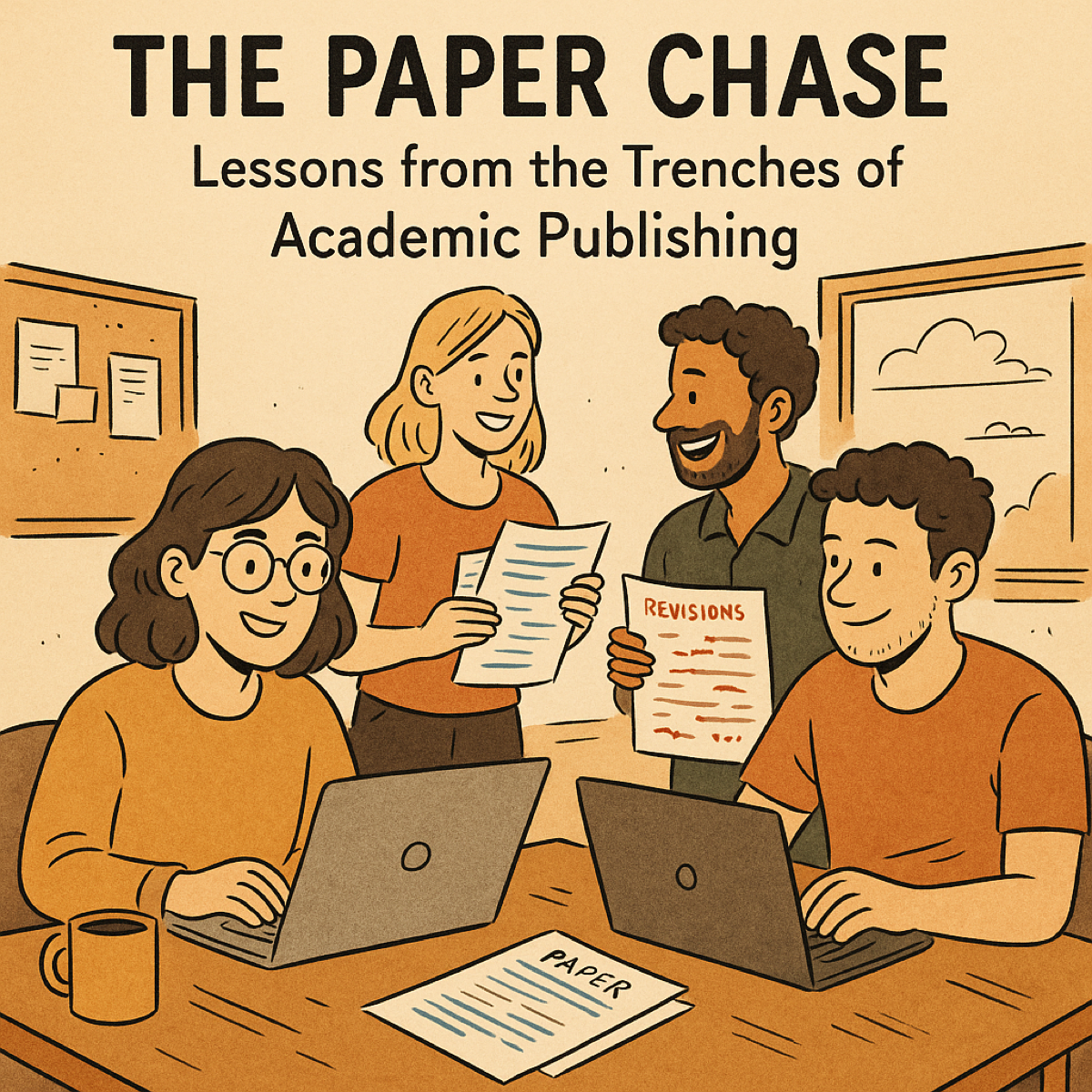
Over coffee, shared Google Docs, and endless rounds of reviewer comments, we’ve laughed, learned, and occasionally cried (academically, of course). This post is my attempt to capture some of those lessons and moments — from the frustrating to the uplifting.
🎯 Tip #1: Writing a Paper is Not the Hard Part — Rewriting It Is
Let’s get one thing straight: the first draft is only the beginning. The real work starts when the reviewers step in. You’ll find yourself rewriting entire sections (hello, Discussion), restructuring arguments, or deleting beautiful paragraphs that just don’t fit.
Common mistake: Thinking that if you’ve written a solid draft, you’re almost done.
Solution: Embrace revision as the real path to clarity and impact.
📌 Tip #2: Highlight Your Revisions (But Not Too Much)
Some journals ask you to avoid tracked changes and instead highlight modifications in blue or another colour. It’s a small formatting tweak, but it makes a huge difference in how readable your revised paper is for reviewers.
Common mistake: Submitting a messy revision with mixed track changes and unmarked text.
Solution: Follow the journal’s formatting instructions to the letter. It shows professionalism and respect for the process.
🧠 Tip #3: Discussion Is Not a Summary
This one took me a while to fully grasp. The Discussion section isn’t just about repeating results — it’s where you show that your work matters. This is where you engage with the literature, suggest implications, and even provoke a little academic debate.
Common mistake: Turning the Discussion into a second Results section.
Solution: Aim for 5–6 strong paragraphs where you interpret, connect, and speculate (within reason).
🤝 Tip #4: Don’t Do It Alone
Here’s the truth: academic publishing is hard. But it’s a lot less painful when you have a supportive group around you — people who read your drafts, help brainstorm responses to reviewers, or just share a coffee when you’re doubting everything.
In my case, working within the university and having a small, close-knit team has made a huge difference. From co-authors to academic mentors, I’ve found this part surprisingly fun — yes, fun! Collaboration adds energy and perspective that solitary work just can’t provide.
Common mistake: Trying to be a lone wolf.
Solution: Build your “academic squad”. Writing is hard; doing it in isolation is harder.
🧩 Tip #5: Bibliographies Are a Battle
Yes, it’s 2025 and we still spend hours fixing references. From DOIs to inconsistent styles, citation management can become a nightmare — especially when reviewers ask you to remove full DOIs, update references, or add missing citations.
Common mistake: Trusting reference managers blindly.
Solution: Always double-check manually before submission. Style guides are sacred.
😅 The Emotional Side: A Rollercoaster in Disguise
There’s no sugar-coating it: PhD life can be emotionally intense. You might spend hours rewording a sentence or reinterpreting a graph, only to get a terse comment from a reviewer that dismantles it in two lines.
But here’s the fun part: you grow. You get sharper. You learn to take feedback without flinching (well, almost). And every small win — from a positive reviewer comment to a clean paragraph — feels like a personal victory.
🎉 Final Thoughts
Academic writing may seem like a grind, but there’s genuine joy in the process — especially when shared. The path to publication is messy, creative, and often hilarious in hindsight.
If you’re a PhD student just starting out: write boldly, revise smartly, and surround yourself with people who believe in what you’re doing (even when you don’t). And always keep your discussion section alive and kicking.
Happy writing, and may your next reviewer be kind!